The Meaning of Luxury
Housing Market
Luxury is often defined as a nonessential pleasure or privilege, and we have traditionally associated it with high quality, fine craftsmanship, exclusivity, convenience and superior service. In housing, we add expensive materials, generous space, desirable locations and amenities that are unavailable to most people. At least, that is what has rung true in our culture for many years. But culture changes, and what is considered luxurious has always varied from one time and place to another. Perhaps more importantly, what is scarce changes, and scarcity has always had a great deal to do with what human beings value.
At its most basic, it is fairly easy to define what is essential: food, water, clothing and shelter. Almost everything beyond that might technically be considered a luxury. Yet increasingly, when I hear the word luxury, I find myself thinking about things that have very little to do with expensive materials or conspicuous consumption. I think about the luxury of silence, the luxury of solitude, the luxury of privacy, the luxury of not being marketed to, and perhaps most of all, the luxury of having nothing demanding your attention. These things are becoming remarkably difficult to obtain in the fast-paced and increasingly connected world in which we live.
That makes me wonder whether what we currently think of as luxury real estate is about to change rather dramatically. For decades, luxury housing has been associated with expensive stone, enormous expanses of glass, elaborate kitchens, sophisticated technology and exquisite craftsmanship. There has also frequently been another purpose to the luxury home: the ability to demonstrate wealth through the place in which one lives. For some people, that demonstration is itself part of luxury. The house announces success before its owner ever says a word.
There will probably always be a market for that, particularly because there are very different kinds of luxury clients. There are people who have recently acquired wealth, people who have lived with wealth for most or all of their lives, and people who have so much wealth that money itself has largely ceased to have meaning. Those are very different people, and it seems unlikely that they would all seek the same things from their homes.
For someone who has recently become wealthy, there may understandably be a desire to demonstrate what has been achieved. The house can become evidence of success, a way of saying, “I have arrived.” It can also be a means of entering a world to which that person has aspired. But for people who have always had money, and particularly for those for whom another million dollars changes virtually nothing, I suspect luxury increasingly means something quite different. Rather than demonstrating one's relationship with the world, luxury may become a means of escaping from it.
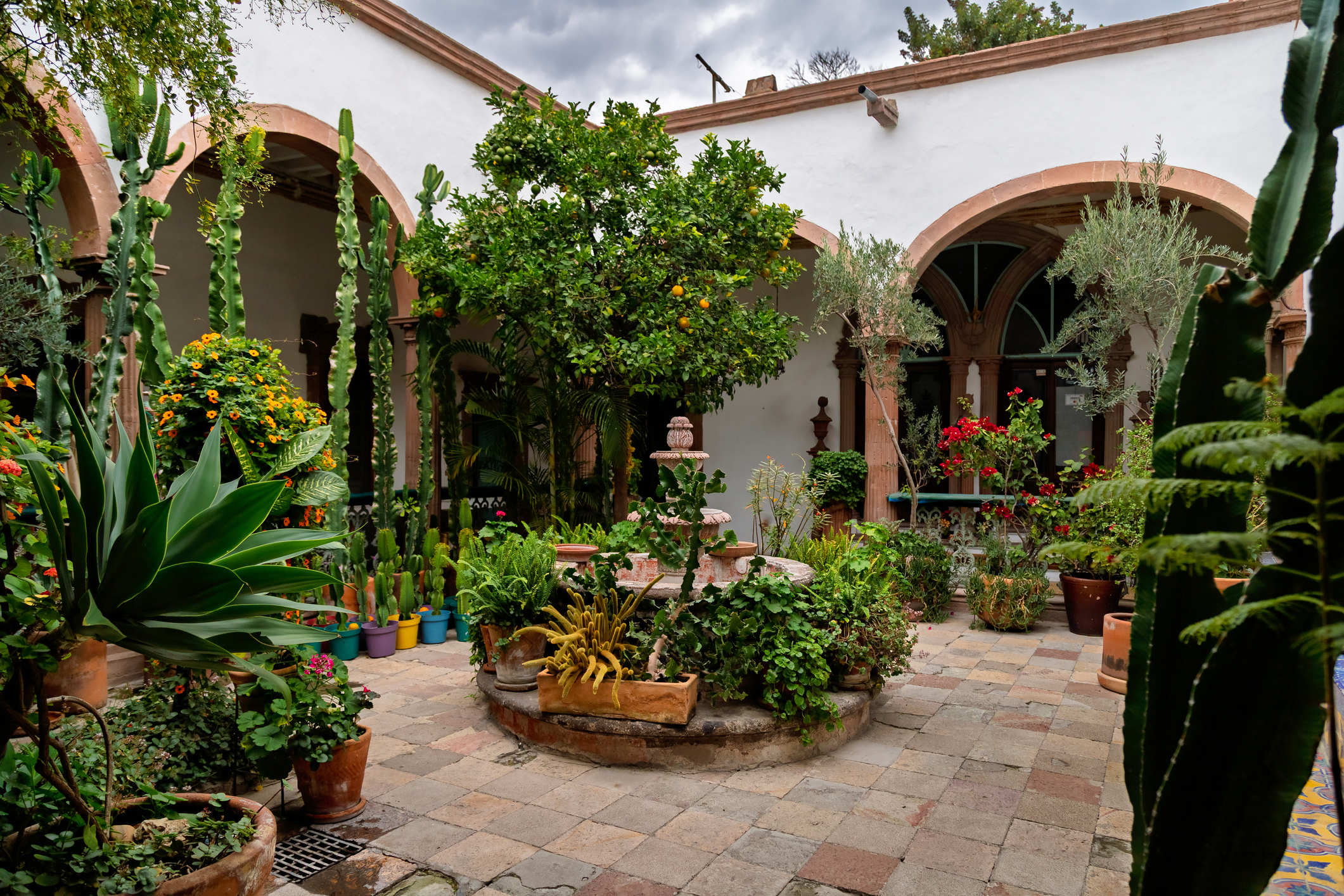
There is an interesting precedent for this here in the Southwest. If we look at some of the older architectural traditions of Mexico and the Sonoran Desert, wealth was not necessarily displayed to the street. Some very beautiful homes presented relatively plain walls to the outside world. The richness was protected within. Once through the entrance, one might encounter an interior courtyard with gardens, fountains, tile, shade, art and places for the family to gather. The luxury belonged primarily to the people who lived there, not to the people passing by.
There is something remarkably contemporary about that old idea. Rather than towers of steel and enormous sheets of glass displaying the wealth inside, perhaps tomorrow's luxury residence will appear surprisingly ordinary to the casual passerby. It might even be designed deliberately to disappear into its surroundings. Once inside, however, the experience would be entirely different. There would be privacy, quiet, comfort and beautiful materials that feel good rather than merely photograph well. Rooms might be designed around human beings rather than screens. Courtyards could be protected from traffic and noise. Technology would quietly serve the occupants rather than constantly demanding their attention, and perhaps one of the greatest luxuries would be the ability to disconnect from that technology altogether.
We can already see hints of this change in the things people are beginning to value. Handmade and imperfect objects have acquired a new appreciation. There is renewed interest in craftsmanship and materials that reveal the hand of the person who made them. Ideas such as wabi-sabi, with its appreciation for imperfection, age and transience, have found an audience far beyond the culture from which they originated. Old things are increasingly reused rather than automatically replaced. Patina can be preferable to polish, and an object with a history can sometimes feel more valuable than something flawless that arrived yesterday.
Perhaps some of this is happening because perfection has become remarkably easy to manufacture, and so has spectacle. We live in a world in which it is increasingly difficult not to be observed, marketed to or interrupted. Cameras are everywhere. Our phones follow us. Screens compete constantly for our attention. Traffic roars outside, aircraft pass overhead and notifications arrive throughout the day. Something somewhere is almost always asking us to look at it. Even our homes have joined the conversation. Doorbells watch the street, refrigerators connect to the Internet, televisions wait for instructions and speakers listen for commands. We have created an extraordinary amount of convenience, but in the process peace has become surprisingly scarce.
That may be the important point. Luxury has never really been about any particular material, architectural style or technology. Luxury is ultimately about having access to something that is difficult to obtain. There was a time when that might have been marble imported from Italy, a room filled with books, an enormous television or a house wired with the newest technology. In the world we are creating now, the rare commodity may simply be a place where nothing is asking anything of you.
Imagine a home where you cannot hear the traffic, where nobody is watching, where the telephone can be put away and where there is no screen insisting upon your attention. You might sit in a courtyard and hear water moving through a fountain, read a book, have a conversation, or simply notice the afternoon air changing as the sun moves behind the mountains. There is nowhere else you are supposed to be and nothing else you are required to accomplish. For people whose lives are filled with responsibility, attention and constant access, that may represent an extraordinary form of wealth.
If this is where our culture is moving, the luxury residence of the future may look less like a monument to wealth and more like a retreat from the world, perhaps even something approaching a Zen retreat. It need not be austere or uncomfortable. Quite the opposite. It might contain extraordinary craftsmanship, beautiful art, remarkable food and every convenience imaginable. The difference is that none of those things would need to be there to impress anyone else. They would simply make it easier and more pleasurable to inhabit the space.
Perhaps that is where the meaning of luxury is headed. After generations of defining wealth partly by how much of the world we could acquire and display, the next expression of luxury may be the ability to decide how much of the world we allow in.