Re-Defining What is a Water Well, and What is Groundwater for Arizona Realtors
Real Estate
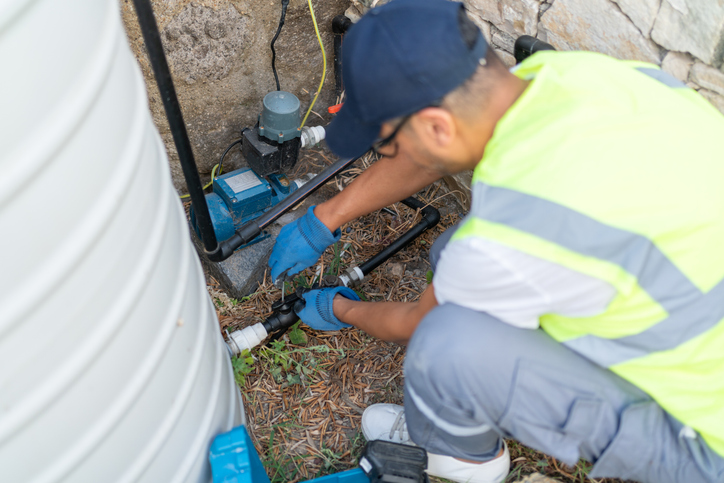
The importance of understanding the difference between water wells and groundwater for realtors serving rural areas of Arizona cannot be overstated. The distinction between water wells and groundwater is often blurred and sometimes confused in real estate transactions. Realtors need to be better informed about water wells and groundwater whenever they represent buyers and/or sellers. There is no denying that groundwater comes out of a water well, therefore many people think of them as one and the same. The truth is that a water well and groundwater are not the same thing, and their differences is important enough for everyone to understand.
Everyone, and especially Realtors representing a property with a water well as its sole source of domestic water, need to understand what a water well really is. A water well is real property. Water wells are a capital improvement to real property that cannot be separated from the land. They are cemented to it, and the ownership of the well transfers with the title of the land when done properly. The Arizona Department of Water Resources (ADWR) grants a permit to drill a water well to only the titled landowner. When the real property changes ownership in the county, the ownership of the well must be changed with the state ADWR, and it must be done properly.
On the other hand, groundwater is a shapeless fluid occurring in nature from which we can draw limited amounts from it and still call it groundwater. Therefore, it should be thought of as a commodity of finite size. Further, Arizona adheres to the rule of reasonable use for managing our groundwater, therefore we should think of it as a commodity for use only. Arizona court rulings have stated that groundwater cannot be owned, rather it can only be used. Groundwater is never real property, but water wells will always be.
The Arizona Groundwater Management Act was passed in 1980, and a few Arizona Supreme court cases later confirmed that percolating groundwater was no longer part of real property. “There is no property in groundwater until it has been captured” is the wording of a ruling by the AZ Supreme Court. Groundwater in AZ can also be defined as a public resource managed by the ADWR and accessible to deeded landowners who can divert, capture and store it where and when they are permitted by the ADWR.
Once groundwater has been diverted and captured, via a pump set in a water well, brought to the surface, stored and controlled by the permitted landowner, it is considered their personal property with the restriction that they must put it to a beneficial use. This rule has a strong emphasis on the word use. A well owner is permitted only the right to capture and use groundwater, not to have full ownership of it.
For groundwater to become a personal commodity for beneficial use, the landowner must first establish legal ownership of it. The Permit that granted the right to capture groundwater is the ADWR’s well registration number. A 55-(number) followed by six unique numbers. That number should be at the forefront of any document transferring a property and any document referring to groundwater. Courts might hesitate to settle a claim of ownership of a well, or any document referring to groundwater, if legal ownership of either was not clearly established.
For some time, an accepted beneficial use of groundwater has been to share some of the groundwater with a neighboring property using some form of agreement. Parties have used terms like Well Share Agreement (WSA), Shared Well Agreement (SWA), Well Use and Maintenance Agreement (WU&MA, or A Declaration of Covenants, Conditions and Restrictions (CC&R) in an attempt to share groundwater by describing real property improvements and offering an undivided fractional interest in it to others.
Older WSAs that purported to share groundwater but referred only to real property might not actually grant a share of groundwater to another party, because there is no groundwater in real property. Likewise, there is no groundwater in a shared well easement because an easement is a non-possessory interest in someone else’s real property for a specific purpose and often for a limited time. Groundwater cannot be legally shared using only an easement interest in another person’s real property. If groundwater is to be shared with the person possessing it as a personal commodity for use, then it should be done under a groundwater-sharing contract.
CC&Rs were often used to provide a future shared water right whenever the real property was sold. But there is no property in groundwater until it has been captured so a WSA or CC&R that doesn’t establish right of ownership to the groundwater being shared by providing a well registration number up front may be questionable in court. Agreements that strived to share groundwater, without establishing legal ownership of it, not stating that sharing of groundwater was their intent, and wording in the agreement stating they were sharing undivided interest in real property, may be considered frustrated by what they didn’t accomplish. They did not establish an agreement for the sharing of groundwater.
This sounds contrary to everything thought about water wells and groundwater in the past, but now is the time to set our thinking straight when it comes to sharing groundwater coming from domestic water wells. The Registration number for a water well is an essential item to have accurately referenced in all documents referring to properties served by a domestic water well, private or shared.
Water is such an essential part of home ownership, any legal right to groundwater should be done via a legal contract that established ownership, states that the intent is to share groundwater and not an agreement to share real property interests and expenses. A water well is real property, and groundwater is personal property to use or share, and they must be properly treated in all documents used in real estate property transfers.

Gary was a real estate instructor with the Arizona School of Real Estate and Business in Tucson and Seattle between 2014 and 2017. During that period, he authored three e-books and wrote a number of articles for the Arizona Journal of Real Estate about water wells and real estate transfers.
He retired from active teaching in 2017, ended up in Prescott where he became an Affiliate member of PAAR in January of 2026. That's when he decided to revise and combine his three e-books into two paperback books. His first e-book was designed specifically for real estate agents and broker and was titled: "Domestic Water Wells in Arizona, a Guide for Realtors and Mortgage Lenders" now revised for 2026. His second books is also an updated version of two earlier e-books, and is now called: "Groundwater-Sharing Contracts, revised for 2026."
Gary has a long career in groundwater and teaching having taught many workshops and classes to private well owners, real estate sales and mortgage lenders, water well drillers and pump installers. He was a licensed water well driller/pump installer for twenty years. He is also an Arizona Registered Professional Geologist, his license to consult about groundwater. Gary has inspected hundreds of properties with domestic water wells for the sale and transfer of real estate. He works under his company In2Wells, LLC as a consultant, a writer, and public speaker. Gary's book can be found on Amazon and Barnes & Noble. They can also be found on his website.