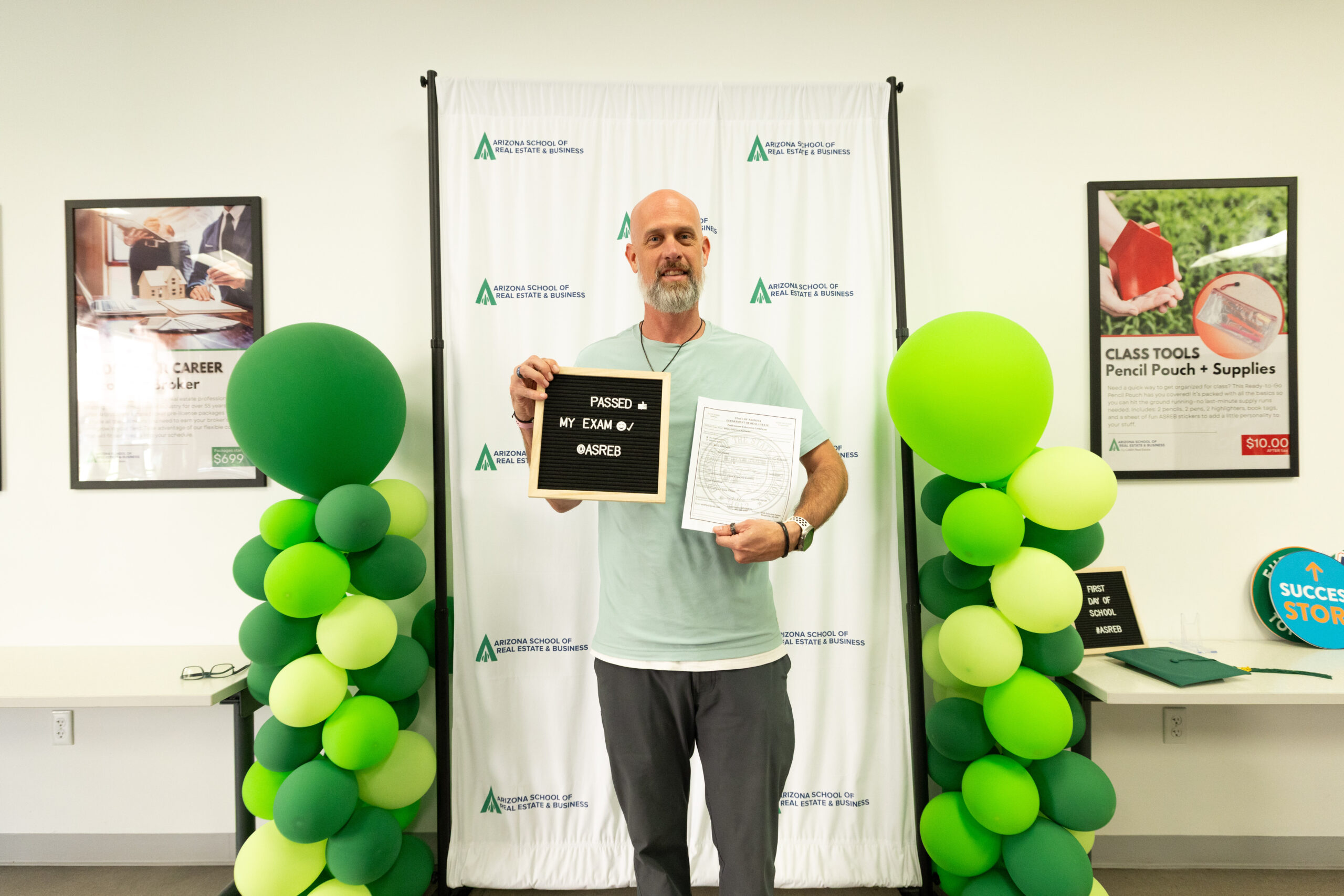
Most people go into the Arizona real estate licensing exam underprepared in one specific way: they study the material thoroughly but don't understand the exam's structure until they're sitting in the testing center. That's fixable.
The exam has two sections—an 80-question national portion and a 60-question Arizona state portion—and you must pass both. For a full topic-by-topic breakdown of every content area on each section, see our complete guide to what's on the Arizona real estate exam. This post focuses on how to prepare strategically: study plan, readiness signals, and the logistics sequence that trips people up before they even sit down.
The Section That Causes Most First-Time Failures
The state section is where most failures happen. Candidates who studied generic national prep material and assumed Arizona-specific content would overlap fail the state section at a disproportionate rate. It doesn't fully overlap.
Areas to study specifically for the Arizona state section:
Commissioner's Rules and Arizona Revised Statutes Title 32: ADRE regulations governing how licensed agents must operate in Arizona. Tested directly and in scenario form.
Trust fund handling: Arizona has specific rules about how agents and brokers manage client funds, when deposits must be made, and what constitutes a violation. These show up regularly.
Disclosure requirements: Arizona's disclosure obligations around property conditions and agency relationships differ from generic national standards.
License law specifics: License types, renewal requirements, supervision requirements for salespersons under brokers, and when a license becomes inactive vs. expired under Arizona law.
Agency definitions under Arizona law: How Arizona defines dual agency, designated agency, and the duties owed to clients vs. customers.
The ASREB 90-hour pre-licensing course covers all of this. Your exam prep should reinforce the state content specifically—not just review national material and assume it transfers.
How to Build Your Study Plan
Phase 1: Complete your 90-hour coursework first
The pre-licensing course is your foundation. Don't split your attention between learning new material and drilling practice questions—finish the coursework, then shift to dedicated exam prep. If you haven't enrolled yet or are weighing formats, see how the online Arizona real estate course works.
Phase 2: Diagnose your baseline with practice exams
Before deciding how long to study, take a full practice exam—both sections—and see where you land. ASREB students have access to CompuCram, which includes an 80-question national simulation and a 60-question Arizona state simulation. Your baseline score tells you which areas need the most work before you're exam-ready.
Phase 3: Target weak categories, not total hours
The most common prep mistake is logging study hours without targeting gaps. If you're scoring 85% on national content and 62% on Arizona state material, spending equal time on both wastes your most limited resource: time. Identify your bottom two or three topic categories and focus there until your practice scores are consistently above passing. Note that real estate math is one of the areas where candidates lose the most avoidable points—it's learnable and worth drilling specifically.
Phase 4: Know when you're ready
ASREB's CompuCram Readiness Guarantee means you don't sit for the exam until your practice scores indicate you're ready. The readiness indicator tracks performance across multiple practice sessions—not just your best score, but your consistent performance. A single 80% after ten attempts isn't the same as consistently hitting 80%+ across your last five sessions. Use that signal, not a calendar date, to decide when to book.
The Logistics Sequence—Don't Let This Trip You Up
Scheduling and logistics cause more preventable delays than content gaps.
Fingerprinting: Arizona requires a fingerprint clearance card as part of your ADRE background check. Processing takes time—sometimes several weeks. Start it as soon as you enroll, not after you pass the exam. Your clearance card doesn't block the state exam, but it does block your license application. Don't finish the exam and then wait weeks for something you could have had in hand already.
Pearson VUE scheduling: Book your exam appointment as soon as you're hitting consistent passing scores on practice exams. Pearson VUE has testing centers across Arizona—Phoenix, Tucson, Scottsdale—but appointment availability varies. Don't wait until you feel completely ready to check availability; book your slot while continuing to prep.
What to bring: Government-issued photo ID. Scratch paper and a calculator are provided at the center—no personal items allowed in the testing room.
Day of the Exam
Arrive early. Pearson VUE runs on tight schedules and late arrivals can forfeit their appointment.
You have a fixed time window—typically 3.5 hours for both sections—but most candidates finish well within it. Don't rush: read every question fully before answering. Scenario questions are designed to test application of a rule, not just memorization of it. Flag questions you're uncertain about and return to them rather than stalling mid-exam.
If You Don't Pass the First Time
It happens. ASREB students pass at a 74% rate—above the statewide average—but a meaningful percentage of candidates retake at least one section. Failing the first attempt is not disqualifying.
ASREB's Pass or Don't Pay Guarantee refunds your first state exam fee if you don't pass on your first attempt, provided you followed the recommended study plan. You can retake individual sections—if you pass national but fail state, you only retake state.
Before rebooking, review your Pearson VUE score report. It breaks down performance by content area and tells you specifically where you lost points. Use that report to direct your next prep phase—not general re-studying.
Frequently Asked Questions
How many questions are on the Arizona real estate exam?
140 total—80 on the national section and 60 on the Arizona state section. Both must be passed in the same licensing cycle.
What is the passing score for the Arizona real estate exam?
Approximately 75% on each section. Scores are independent—passing one doesn't carry over if you fail the other.
How long does it take to prepare for the Arizona real estate exam?
Most ASREB students who study consistently complete prep and pass the exam within 8–12 weeks of starting coursework. The right measure isn't time—it's your CompuCram readiness score hitting a consistent passing range across multiple sessions.
Can I take the exam before finishing my fingerprinting?
Yes. Fingerprinting doesn't block your exam appointment—it blocks your license application afterward. Start it early so it's not the thing slowing you down after you pass.
What happens if I fail both sections?
You can retake both. There's no limit on retakes in Arizona, though each attempt requires a new exam fee. ASREB's Pass or Don't Pay Guarantee covers your first attempt.
Start Your Arizona Real Estate Pre-Licensing Course
ASREB students pass the Arizona Real Estate Exam at a 74% rate—above the statewide average—and every package includes CompuCram exam prep with full national and state simulations, plus the Pass or Don't Pay Guarantee.
View Pre-Licensing Course Options
See the full licensing process step by step

Author: Arizona School of Real Estate
Arizona School of Real Estate & Business (ASREB) provides licensing, continuing education, and professional development programs for real estate and related industries. Our blog delivers practical insights, industry trends, and educational resources to help professionals build, grow, and advance their careers.
View All Posts